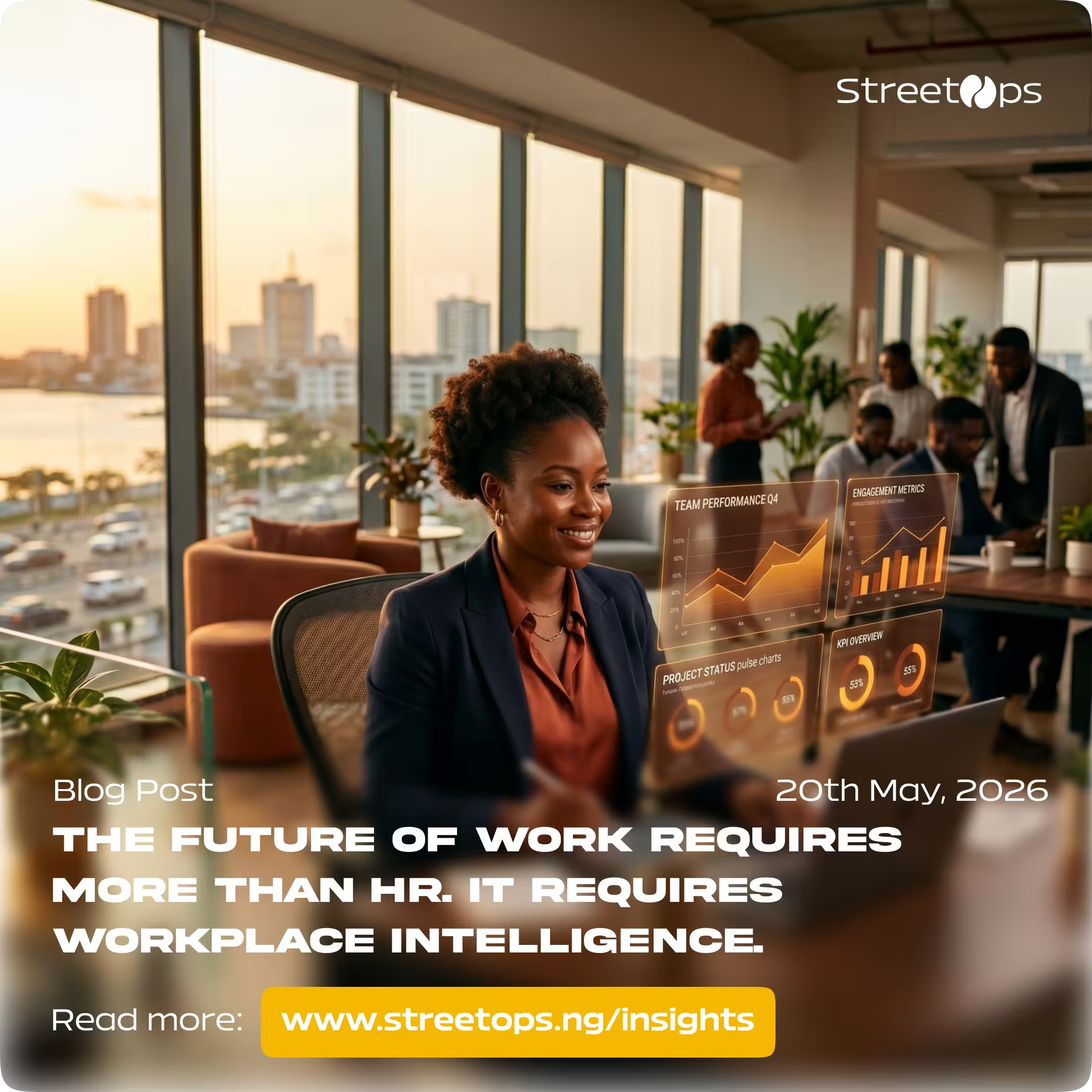
HR was built to administer people. What organizations need now is a way to actually understand them.
Most organisations are running an engine they have never fully looked at. The meetings happen, the work gets done, people come and go, and somewhere underneath all of it a culture is operating, shaping how people think, what they expect from each other, and what they would find strange or wrong if someone violated it. The problem is that very few organisations are managing that engine deliberately. They are managing the surface of it and wondering why the results underneath keep disappointing them.
Edgar Schein mapped organisational culture across three levels. Artefacts are what you can see, the office layout, the rituals, the way meetings are run. Espoused values are what the organisation claims to stand for, the mission, the principles, the culture deck. Basic assumptions are the deep unconscious beliefs that actually drive behaviour, what people genuinely believe about how power works here, whether honesty is safe, whether effort gets recognised, whether this place actually means what it says. Most organisations invest heavily in the first two levels and never touch the third, which is precisely why most culture initiatives produce very little lasting change.
Workplace intelligence is the practice of understanding and designing across all three levels at once. It is not a mood survey or an engagement score. It is a structured approach to how an organisation is designed, how it executes, and how it monitors itself continuously so that the gap between the stated culture and the lived culture stays visible and manageable rather than quietly growing into something that costs the business in ways that are hard to trace back to a single cause.
Productivity sits at the heart of this conversation and it is almost always misunderstood. Most organisations treat productivity as an output problem, something you fix by tracking more, pushing harder, or adding tools. The organisations that actually sustain high productivity understand it as a presence problem, and not presence in the way that gets confused with micromanagement. Presence as a design function. The systems, rhythms, feedback loops, and environmental conditions that keep people connected to their work, to each other, and to the standard the business needs to operate at. When those systems are designed well, presence is built in. When they are not, no amount of oversight closes the gap.
This is where the conversation about HR becomes uncomfortable but necessary. Organisational behaviour conditioning, the deliberate shaping of how people think, interact, and operate inside a workplace, is not the same thing as human resource management. HR as a function was built primarily around compliance, hiring, and people administration. Organisational behaviour sits at the intersection of psychology, anthropology, economics, and sociology. It asks different questions, requires different tools, and demands a different kind of expertise. The honest question worth asking is whether the HR professionals leading people functions in most organisations today are equipped with enough knowledge across those disciplines to do what the modern workplace actually requires of them. That is not a criticism. It is a structural gap that the industry has not fully acknowledged yet.
Filling that gap requires a different kind of infrastructure, one that brings behavioural intelligence into the operating system of the business rather than leaving it as a periodic initiative. That is exactly what Paige was built to do. Paige is a work environment platform designed by StreetOps to help organisations design, execute, and continuously monitor the conditions that shape how their people actually work, bringing workplace intelligence out of the consultant's report and into the daily rhythm of the business.
The future of work is not just about better tools or more flexible policies. It is about organisations that finally understand the engine running underneath everything and build the intelligence to manage it deliberately.